

2023 was an impactful year in IREC’s work to build the foundation for a 100% clean energy future.
One of the things that differentiates IREC from many other groups working in the clean energy sector is the complementary nature of our three distinct, but interconnected areas of work: State Regulatory Engagement, Workforce Development, and Local Initiatives (focused on community-level clean energy adoption).
Without sound regulatory policies, we know that clean energy growth is often stunted, as states confront daunting challenges like multi-year delays for projects to be interconnected to the grid. IREC’s Regulatory Team—one of the few independent nonprofit stakeholders that brings technical engineering expertise into regulatory dockets—-contributes expert guidance to align states’ regulatory frameworks with the conditions needed for equitable, affordable, and safe clean energy growth.
As that market growth materializes, more people with clean energy training and skills are needed to implement all aspects of clean energy projects. IREC’s Workforce Team is making sure that there are enough well-trained professionals to meet the demand—and that people of all backgrounds have access to quality clean energy jobs.
Meanwhile, IREC’s Local Initiatives Team ensures that communities and local governments have the capacity to manage clean energy growth locally and ensure that new projects benefit their communities and align with local needs. Each of these areas is essential for the clean energy transition to be successful—and to ensure that this transition benefits all Americans.
With the passage of the Inflation Reduction Act in 2022, this work, and the synergies between each of these programs took on new significance because the foundation we collectively lay for the growth of clean energy will determine how impactful these unprecedented investments in clean energy and climate change mitigation—$369 billion!—will be.
I am proud to say that each of our teams delivered major impacts in 2023 that bring us closer to a 100% clean energy future—as you’ll see in the updates below.

Larry Sherwood


In the Regulatory Space

Building the Workforce
IREC provides strategy and direction to help those working toward clean energy goals foster a growing and equitable clean energy workforce.

In the Community
IREC empowers local governments, communities, and individuals to take actions that increase the deployment of clean energy and implementation of energy efficiency.


In June, IREC released its Freeing the Grid interconnection resource, which graded each state in the nation (as well as Washington, DC and Puerto Rico) on the quality of its interconnection policies. These policies govern how DERs—such as solar and energy storage systems—can safely and reliably connect to the distribution grid. The distribution of grades (only one “A” and 6 “Bs”) highlights that most state interconnection rules are in need of updates to reflect best practices that have emerged over the last several years.
Held in November in Minneapolis, Minnesota and online, the IREC Vision Summit 2023 explored critical clean energy interconnection issues and elevated key solutions. The event brought together stakeholders from across the country to discuss innovative solutions for overcoming interconnection barriers, incorporating energy equity into interconnection policies, and addressing microgrid interconnection challenges. Attendees gained practical skills to support effective distribution interconnection reform in the U.S. and built and strengthened relationships with other stakeholders.
In addition to the Vision Summit, IREC’s Regulatory team hosted a day-long Interconnection Training, which provided attendees with practical guidance and hands-on support to understand key interconnection issues.

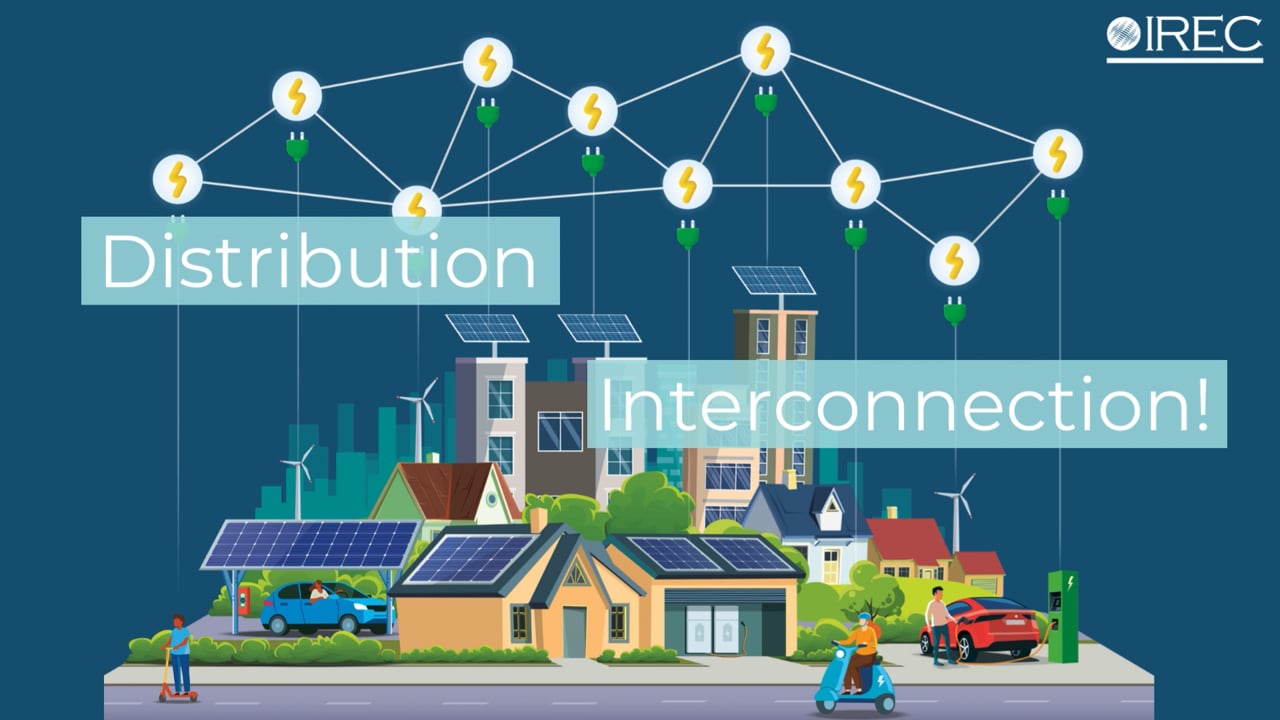
But it wasn’t all business—we also unveiled an original song about distribution interconnection (with both acoustic and heavy metal versions) that we hope will help bring an appreciation for the importance of this wonky topic. As the song explains “Distribution Interconnection, connecting power to the grid, it might not seem like much but it’s something we all need!”
Acoustic Version

Metal Version

2023 included the launch of IREC’s first podcast, Energy Optimist, hosted by IREC Regulatory Vice President Radina Valova. The monthly podcast highlights solutions to thorny energy policy challenges through bite-sized interviews with leading experts. Each episode ends with solutions and reasons for optimism.

Since 2005, IREC has published model interconnection procedures that provide template language to make it easy for states and utilities to reform their interconnection rules to align with best practices for enabling faster and less costly interconnection of DERs, while maintaining safety and reliability. This proven tool to help states achieve their clean energy goals has been downloaded thousands of times and helped shape interconnection policies across the nation.
In August, IREC released its latest update to the model rules, the Model Interconnection Procedures, 2023 Edition. This latest edition reflects significant developments in interconnection best practices that have emerged as technologies like energy storage have become more prevalent.
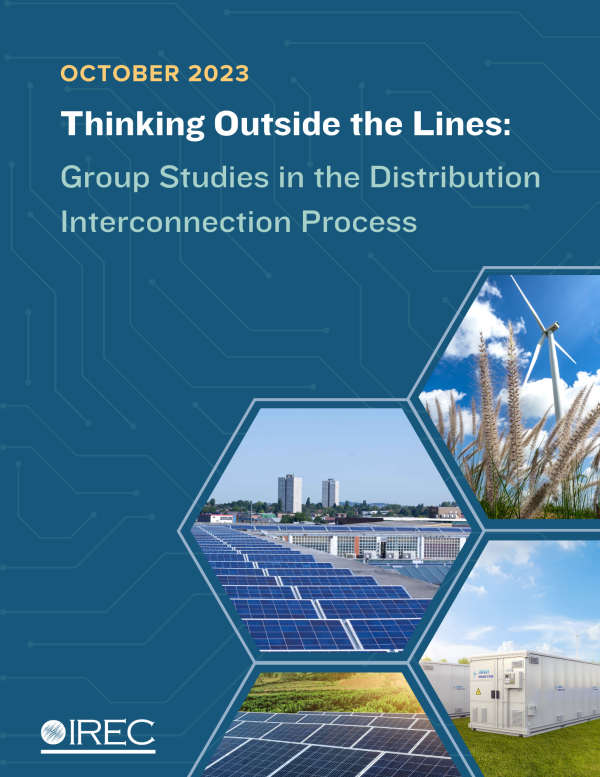
In October, IREC published Thinking Outside the Lines: Group Studies in the Distribution Interconnection Process. This report provides guidance on the use of “group studies,” an emerging practice to streamline the interconnection of DERs to the electric distribution grid. The report helps regulators, utilities, and clean energy stakeholders evaluate whether group studies may help address interconnection challenges in their jurisdictions. This is an important and timely question because the interconnection process has slowed in many states as more and more DER projects seek to interconnect to the grid.

The Institute of Electrical and Electronics Engineers 1547™-2018 Standard (IEEE 1547-2018) is a technical standard that establishes how distributed energy resources (DERs)—like solar and energy storage—can connect to the grid. In particular, it establishes interconnection requirements for smart inverters, which have advanced “grid support” functions that can help the grid accommodate higher levels of renewable energy.
IREC’s new IEEE 1547-2018 Adoption Tracker provides regulators, utility staff, and other DER stakeholders with visibility into which jurisdictions have adopted the IEEE 1547-2018 standard. The tracker is the most comprehensive tracking to date that compiles this adoption information for all states across the country.


In August, IREC was selected by the U.S. Department of Labor Office of Apprenticeship to serve as an Industry Intermediary for Registered Apprenticeships (RAs) in clean energy. Through the contract, IREC is leading the Apprenticeships in Clean Energy (ACE) Network, a national coalition of industry, education, and workforce development leaders working to increase the use of RAs in clean energy industries.
Registered apprenticeships combine structured on-the-job training for workers, with related classroom instruction and lead to a nationally recognized credential. Benefits for employers include highly skilled employees and better recruitment and retention outcomes. For workers, they can reduce barriers to entry by providing an opportunity to “earn while you learn,” among many other benefits. IREC is providing no-cost technical assistance to help clean energy employers join or develop RA programs, and leading national forums to raise awareness of this win-win approach to workforce development.
IREC also released the Registered Apprenticeships Toolkit for Clean Energy Employers, providing employers and other stakeholders with the background information and supplemental resources needed to train the clean energy workforce through Registered Apprenticeship programs. The toolkit outlines the key components of these programs, benefits to employers and workers, how to meet federal and state apprenticeship requirements, and a step-by-step guide to getting started.


In July, IREC released its 13th annual National Solar Jobs Census, a comprehensive analysis of solar job growth and workforce development, nationwide and state by state. The report found that in 2022, the U.S. solar energy workforce grew by 3.5% from the previous year with 263,883 solar workers in all 50 states, the District of Columbia, and Puerto Rico. Jobs in the residential market segment increased by about 9,500 jobs, while the threat of new tariffs and other supply chain concerns led to a loss of about 6,000 jobs in utility-scale solar.
The Weatherization Assistance Program (WAP) helps low-income families retrofit their homes to save on energy costs and make their homes healthier. The program, and the weatherization industry more broadly, faces challenges in meeting the demand for workers; IREC is leading a novel initiative to improve recruitment for these careers. In 2023, IREC helped WAP agencies develop, pilot, and deploy outreach strategies to raise awareness of and interest in building performance careers. This work will help the WAP program hire a new generation of WAP workers, including women, opportunity youth, Black, Indigenous, and People of Color (BIPOC), Asian American and Pacific Islanders (AAPI), and other underrepresented groups.

The hub of these efforts is Green Workforce Connect, a new home weatherization career platform that connects job seekers, students, and contractors to local training providers and employers. To develop this platform, IREC used an inclusive, intentional, and collaborative approach to ensure our solutions meet the needs of target audiences. Over 600 people participated in listening sessions, feedback questionnaires, focus groups, and conference breakout sessions to inform project design and development.
Green Workforce Connect launched in early 2024 with information on building performance careers in three states, as part of a pilot program to test effective recruitment strategies. In 2024, the platform will be expanded to a national scope, applying the lessons learned in the pilot to support WAP agency recruitment in all states. The platform will also be expanded to include resources and connection opportunities for additional clean energy careers.

The Solar Ready Vets Network, funded by the U.S. Department of Energy (DOE) to strengthen solar career pathways for veterans and support the industry’s efforts to invest in military talent, has existed in different formats since 2014. In 2023, IREC and partners secured additional funding to build on recent milestones and continue this important work. Solar Ready Vets includes a fellowship program that connects transitioning service members with on-the-job training in leadership and management roles in the solar workforce, in partnership with Hiring Our Heroes.
From April 2021 through March 2024, IREC led a DOE-funded program to develop a free online clearinghouse of educational resources for building and safety professionals. The resources include information on solar photovoltaics, energy storage systems, electric vehicle supply equipment, and grid-interactive efficient building technologies. Building owners, designers, installation contractors and developers, authorities having jurisdiction (AHJs), and fire service personnel all benefited from a shared understanding of clean energy technologies, including safety and code-related requirements.
Known as Educational Materials for Professional Organizations Working on Efficiency and Renewable Energy Developments (EMPOWERED), the program was a unique, collaborative effort funded through the U.S. Department of Energy’s Solar Energy Technologies Office, Vehicle Technologies Office, and Building Technologies Office.

IREC is proud to have exceeded expectations with this project. Over the course of the three-year project, more than 154,000 unique visitors accessed over 70 educational resources and online courses helping to advance their knowledge and careers. Learner feedback was overwhelmingly positive. By driving stakeholders with diverse perspectives to a set of common resources, we facilitated the critical dialog that is needed for a truly transformational adoption of clean energy technologies.
These free resources are available on the Clean Energy Clearinghouse at cleanenergyclearinghouse.org.
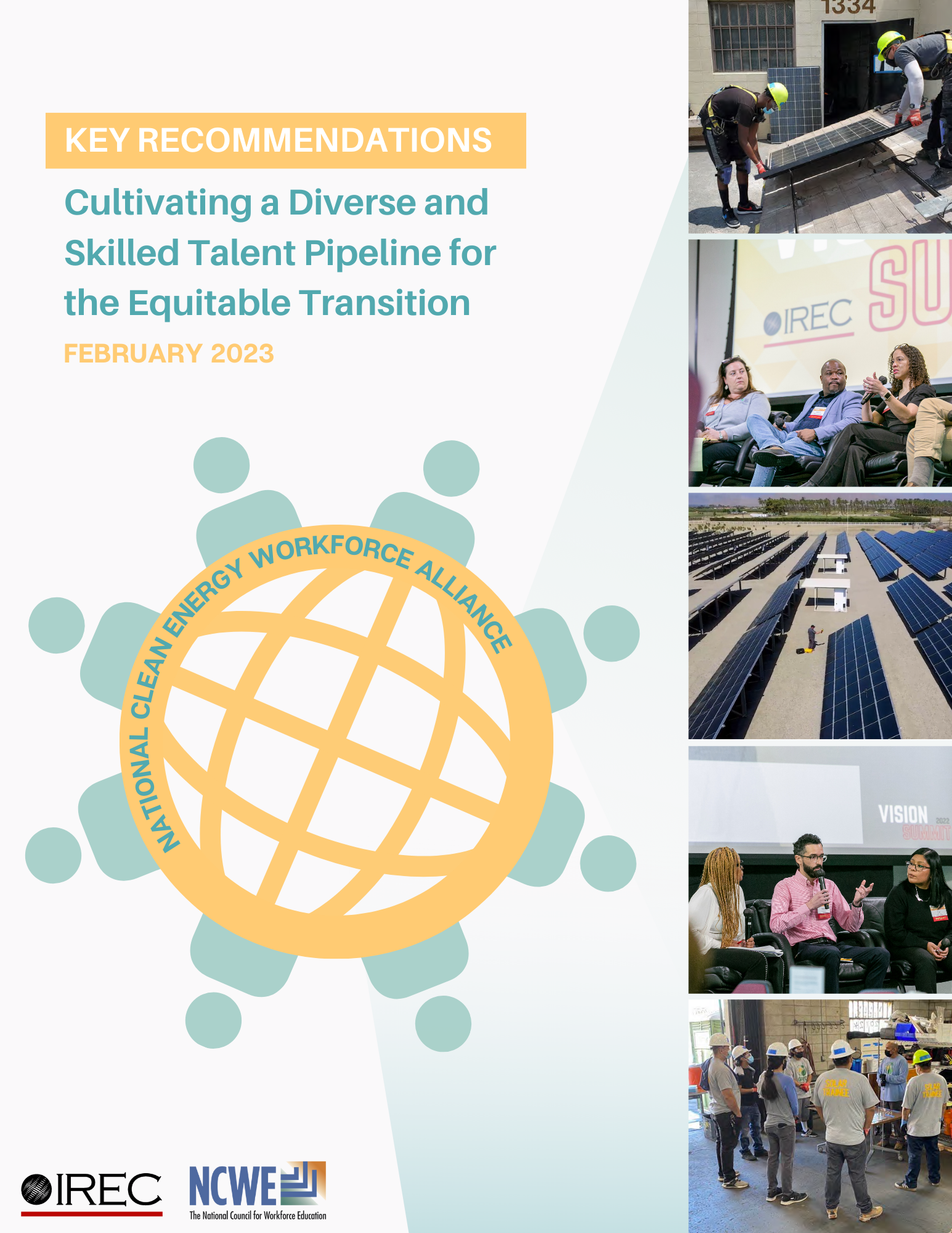
In February, IREC released Key Recommendations: Cultivating a Diverse and Skilled Talent Pipeline for the Equitable Transition, the outcome of a series of in-depth convenings led by the National Clean Energy Workforce Alliance. IREC co-leads this forum uniting more than 500 stakeholders across the U.S. to improve recruitment, education, and placement outcomes with a focus on energy justice, in partnership with the National Council on Workforce Education and support from Bank of America Charitable Foundation. Members include employers, education and training providers, organized labor, community-based and energy justice organizations, workforce program designers and funders, and policymakers.


With the support of the U.S. Department of Energy (DOE) Solar Energy Technologies Office, IREC’s national SolSmart program expanded last year to help more cities, towns, counties, and regional organizations strengthen local solar energy markets, achieve energy equity goals, and encourage economic growth.
The program plans to add 500 new SolSmart designees by 2027, doubling the total number of solar-friendly communities nationwide. This will allow even more residents, businesses, nonprofits, and government facilities to meet their electricity needs through solar. This is particularly significant to the nation’s climate and clean energy goals, given that independent research has shown that local participation in SolSmart can lead to increased solar capacity of 18-19% per month.
The Sustainable Energy Action Committee (SEAC), which IREC facilitates, provides a national platform for collaboration between key stakeholders in code enforcement and permitting for solar and solar-plus-storage projects. SEAC’s monthly public meetings provide important education on renewable energy codes and standards issues to 50-100 stakeholders at each public meeting. The meetings include presentations or panel discussions led by subject matter experts on emerging issues related to different clean energy technologies.
In addition to stakeholder education, key outcomes from SEAC include proposals to improve codes and standards, as well as guidance documents, information bulletins, reports, and other informational resources. SEAC had an 81% success rate for the code change proposals the group submitted as part of the 2024 International Codes process. These recommendations clarified requirements for electric vehicle charging, building-integrated photovoltaics, photovoltaics, and energy storage systems. This work improves permitting and inspection practices for clean energy systems by standardizing best practices that enhance safety, increase efficiency, and reduce costs for both jurisdictions and installers.

In 2023, SEAC hosted three workshops on energy storage issues: a 4-hour virtual workshop and two in-person sessions, one in Temecula, California and another in Gainesville, Florida. The sessions covered energy storage safety, risks, inspections, plan reviews, common permitting issues, and an overview of UL9540 and UL9540A (a safety standard and test method, respectively, for energy storage fire safety). Workshop attendees included fire service representatives, AHJs, manufacturers, and installers.

In August, IREC, RMI, and SEAC published Planning and Zoning Guidance for Electric Vehicle Charger Deployment, a document that guides municipalities on approval processes for siting and installing electric vehicle (EV) charging infrastructure. IREC and RMI developed the guidance based on a year-long process that engaged municipalities, electric vehicle service providers, as well as planning consultants, researchers, and recognized experts. The guide came at an auspicious time, as EV sales accounted for a record 8.4 percent of all new U.S. vehicle sales in the first quarter of 2023—a nearly 75 percent increase from 2022.

In November, the SEAC Storage Snapshot working group developed a guidance on how to make new construction “energy storage-ready” and how to make retrofitting buildings to add energy storage more cost effective. It outlines steps builders can take to make it easy to add energy storage in the future and avoid burdening future homeowners with unnecessary costs. Developed with input from manufacturers, contractors, industry professionals, and fire safety officials, this resource provides practical suggestions for integrating ESS with conventional electrical services in single-family houses and townhomes.

In October 2023, IREC launched Charging Smart with the support of DOE’s Vehicle Technologies Office. Charging Smart is a structured technical assistance and designation program that supports local governments in setting and achieving equitable EV-readiness goals. Technical assistance is available at no cost. The program provides tools for communities to streamline permitting and deploy best practices to develop EV infrastructure and support e-mobility and fleet operations.
With the support of our lead partner, The Great Plains Institute (GPI), we are piloting Charging Smart in five states (Minnesota, Michigan, Ohio, Virginia, and Colorado) and three regions (north Texas, southern California, and northern Illinois). The program will expand nationally in 2024.
In Puerto Rico, IREC is helping accelerate the transition to a renewable, resilient, and just energy future. Our local staff work with a network of local partners to facilitate community microgrid projects, promote local resilience, build the territory’s solar workforce, and expand the options for solar-plus-storage financing.

In November, Secretary of Energy Jennifer Granholm visited IREC and partners in Yabucoa, Puerto Rico, to discuss ongoing initiatives to advance community-based energy resilience. With support from the Department of Energy, IREC is leading a new initiative to facilitate community-based solar-plus-storage installations. These Resilience Hubs will allow several of Puerto Rico’s most vulnerable communities to access reliable electricity during, before, or after an extreme storm or another disaster that affects the electric grid.

IREC is working with the community of Castañer to develop an innovative resilience plan based on local needs and priorities, as part of the RACER (Renewables Advancing Community Energy Resilience) program funded by the U.S. Department of Energy. The resilience plan will articulate the needs and priorities of community leaders, residents, and businesses in Castañer with regard to the key electrical services that need to be maintained or restored using microgrid power following an outage. It will also provide a model and framework for other communities to address their resilience needs.
This initiative builds upon a community microgrid that IREC developed in partnership with the Cooperativa Hidroeléctrica de la Montaña, the University of Puerto Rico—Mayagüez, and community leaders. It is one of Puerto Rico’s first examples of a grid-connected microgrid that serves multiple facilities.
In 2023, the IREC team conducted extensive outreach and engagement with community members to understand and prioritize community resilience goals. The resulting plan will be published in 2024. When the plan is complete, our partners at Slipstream Group, Inc. will design and implement an innovative technology system to coordinate and maximize the solar PV panels and microgrid to enhance energy resilience.

Puerto Rico’s transition to a clean and renewable energy future by 2050 will require significant investments in clean energy on its electrical grid. Given the level of investment required, a key question is how this massive solar energy buildout will be financed.
In May, IREC released an updated report, An Assessment of Opportunities and Barriers to Solar Finance in Puerto Rico: Second Edition. The report takes a comprehensive look at the current status of financing for the development of solar-plus-storage across the residential, commercial, industrial, and utility-scale sectors in Puerto Rico. It provides critical information for financing partners to understand current clean energy financing gaps.


Lorraine Akiba • Trenton Allen • Benjamin Anderson • Sara Baldwin • Mark Bortman • Gwendolyn Brown • Carina Campobasso • Christopher Cooper • Bonnie Datta and Guy Nicholson • Laure-Jeanne Davignon • Michael DeAngelis • David Denny • Will Easton • Mark Farber • Joyce Fargas • Eric Filante • Phillip Foster • Givinga Foundation • Amanda Hatherly • Matthew Hirsch • Brandon Hoayun • The William J. Hopkins Jr. Family Trust • Anne Hoskins • William H. Hughes • Kathy Kaufman • Mark Kraemer • Matthew Lake • Nancy LaPlaca • Daniel Lichtman • Peter Lowenthal • Midhat Mafazy • Ryan Mann • Catherine McCormack • Claire and Terry McDonnell • Christopher McKitterick • Stephanie Page • Sean Park • Bruce Plenk • Dan Reicher • Emily Robichaux • Mark Roper • Ronny Sandoval • Polly N. Shaw • Carolyn Sherwood Call • Lawrence Sherwood • Larry Shirley • Ian Shoemaker • Daniel Simon Impact Fund • Eric Sollenberger • Venkatesh Srinivas • Thomas Starrs • Dub Taylor • Jason Thompson Sr. • Scott Townley • Jason Turner • Carlos Alberto Velazquez Lopez • Emma Wang • Sara Watson • Anne Weisberg • Jane M. Weissman • Nathaniel Wells • Jack Werner • John Wilson • Jacob Wolfe • Yuanyuan Xie • 3 anonymous
Bank of America Charitable Foundation
Blackbaud
Boviet Solar
Bright Funds Foundation
California Energy Commission
Engie North America
Enphase
Fitch Ratings
Kinectrics
Nautilus
Nextracker
Schwab Charitable
SolarEdge
Solar Energy Industries Association
Sunnova
Sunrun
Sunpower
SOLV
TerraCurrent
Barr Foundation
Energy Foundation
Kresge Foundation
Leon Lowenstein Foundation
McKnight Foundation
The Schmidt Family Foundation
Tilia Fund
U.S. Department of Energy
Maine Public Utilities Commission
U.S. Economic Development Administration
National Renewable Energy Laboratory
New York State Energy Research and Development Authority (NYSERDA)
Colorado Energy Office
U.S. Department of Labor
